
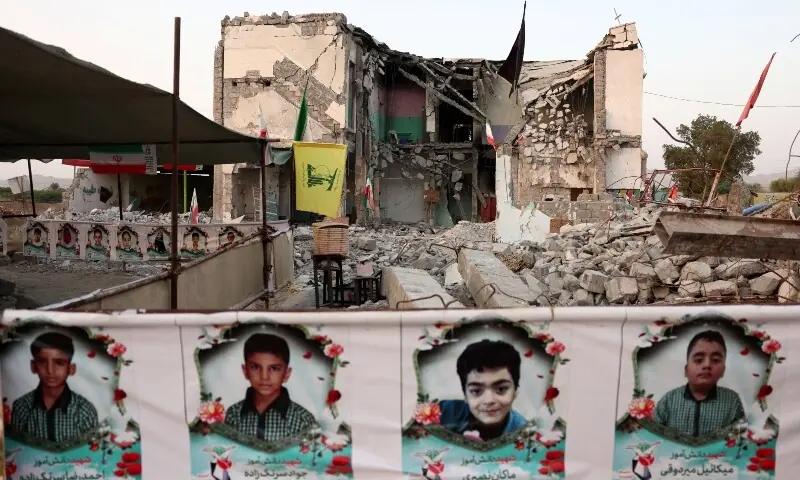
A United Nations fact-finding mission has said there are reasonable grounds to believe that US forces were responsible for two military strikes in Iran in February that constituted war crimes under international law.
The findings are contained in a new report by the Independent International Fact-Finding Mission on Iran and examine the impact of military operations on civilians during the conflict. The report is due to be presented to the UN Human Rights Council.
One of the incidents involved the Shajareh Tayyebeh Primary School in Minab. According to Iranian officials cited by the UN mission, more than 150 people were killed in the strike, including around 120 schoolchildren.
The UN experts said the school was a clearly identifiable civilian building and found no evidence that it was being used for military purposes. The mission said US forces appeared to have relied on intelligence indicating that a senior Iranian military commander was at the location, but failed to adequately verify the information before the attack.
The second incident involved a sports centre in Lamerd. According to the UN mission, the strike damaged nearby residential buildings and a school and resulted in 22 civilians being killed or injured. The mission concluded that the attack was indiscriminate and therefore constituted a war crime.
However, the United States has disputed responsibility for the Lamerd incident. US Central Command said in March that American forces did not conduct strikes in the city on the day in question.
The report does not represent a final court ruling establishing criminal liability. Its finding of “reasonable grounds” means the investigators believe the available evidence provides a sufficient basis for the allegations to be considered seriously and potentially pursued through appropriate legal mechanisms.
The UN mission also examined Iran's response to nationwide anti-government protests that began in late 2025. It accused Iranian authorities of serious abuses, including violence against civilians, internet restrictions and the use of the death penalty, and said the crackdown amounted to crimes against humanity. Iranian authorities have rejected allegations of systematic rights violations.
The findings are likely to receive further attention as the report moves before the UN Human Rights Council. The case also highlights continuing international concerns over civilian protection and accountability during armed conflicts.