
 Alibaba is planning to develop a new generation of artificial intelligence models that could contain between 5 trillion and 10 trillion parameters, highlighting the Chinese technology giant’s growing ambitions in the global AI race.
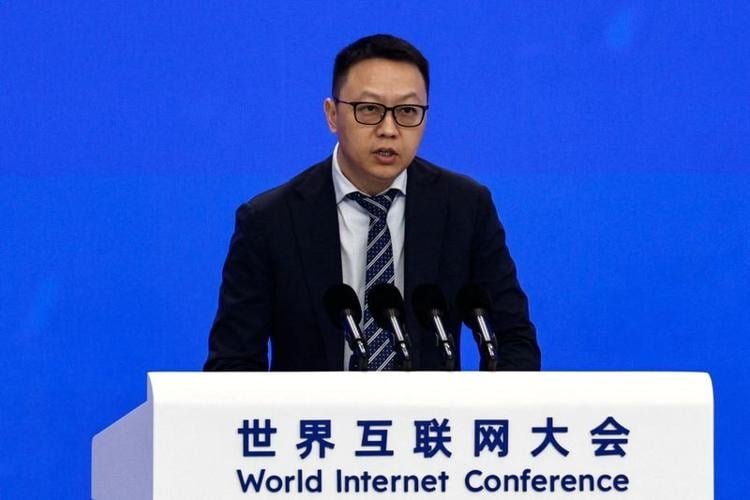
Alibaba Group CEO Eddie Wu announced the plans at the company’s annual Apsara Conference in Hangzhou. The company said its Qwen team is working on new model architectures and data optimisation to enable AI systems to handle more complex and longer-term tasks.
Alibaba said its next-generation Qwen 4 model is already in training, while future Qwen 4.5 and Qwen 5 models are projected to scale to between 5 trillion and 10 trillion parameters.
Parameters are the variables that an AI model learns during training and are commonly used as an indicator of a model’s size. Alibaba’s current Qwen 3.8 Max reportedly has around 2.4 trillion parameters, meaning the planned models could be roughly two to four times larger.
The company is also focusing on what it describes as recursive self-improvement. This involves AI systems identifying limitations, designing experiments and generating data that can potentially help improve future versions of the model.
Alongside its AI model plans, Alibaba unveiled the Zhenwu V900, a new artificial intelligence chip developed by its T-Head semiconductor division. Alibaba described the chip as its most powerful AI processor so far and said it delivers about three times the performance of its predecessor, the M890.
The Zhenwu V900 is expected to enter mass production and commercial release during the first quarter of 2027. Alibaba said the new technology is designed to support large-scale AI training and inference as demand for advanced computing continues to grow.
The chip announcement comes as Chinese technology companies are working to develop domestic alternatives to Nvidia’s advanced AI processors. US export restrictions have increased pressure on Chinese firms to strengthen their own semiconductor and AI infrastructure.
Alibaba is also planning a major expansion of its cloud infrastructure. The company has set a target of increasing its global data-centre capacity to more than 20 gigawatts by 2032.
The expansion reflects the growing amount of computing power required to train and operate increasingly large AI models. Alibaba said strong customer demand for AI is driving growth in its cloud business, although shortages across the AI data-centre supply chain are limiting how quickly capacity can be added.
The company’s latest announcements show that Alibaba is pursuing AI development across several areas at the same time, including large language models, specialised chips and data-centre infrastructure.
However, the planned 5 trillion to 10 trillion parameter models are future targets rather than currently available products. The eventual capabilities of these systems will depend on their architecture, training methods, data and computing infrastructure, not simply on the number of parameters.