
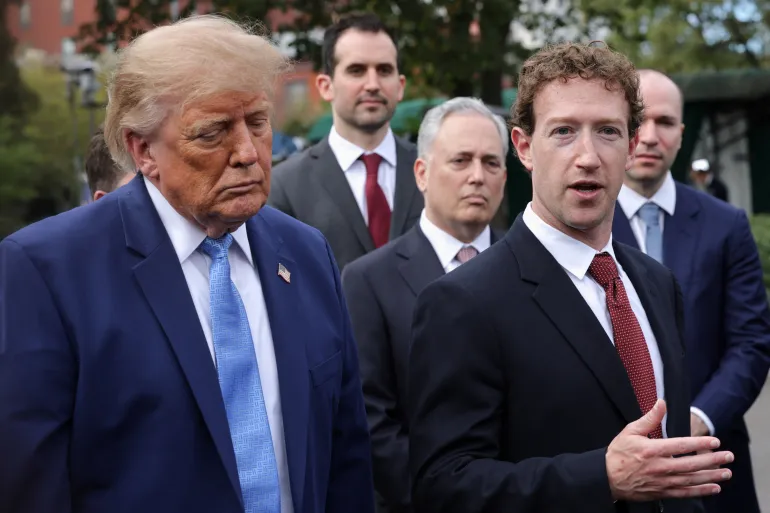
 US President Donald Trump and executives from several major technology companies have signed a voluntary agreement aimed at strengthening safety measures for advanced artificial intelligence systems.
The agreement, known as the White House Accord on Super Intelligence, involves major AI and technology companies including OpenAI, Google, Meta, Anthropic, Nvidia and xAI. It focuses on how companies can monitor and manage the risks associated with increasingly powerful AI systems.
Under the accord, participating companies are expected to establish strong internal controls for their AI systems. They will also work with independent external auditors to assess whether those controls are functioning properly. Company board committees are expected to review reports from both internal and external audits.
Another important part of the agreement is preventing AI tools from accessing or hacking technical systems in unintended ways. The issue has received increased attention following reports involving AI agents interacting with computer systems beyond their intended tasks.
The agreement is voluntary rather than a legally binding federal regulation. However, the accord says that some of its measures could eventually be incorporated into laws or regulations. This means the current framework could potentially become part of a more formal regulatory system in the future.
The White House has also introduced the term “Super Intelligence” for advanced AI and directed federal agencies to use the term instead of “Artificial Intelligence” in official communications. A September 29 executive order states that the new terminology should be used across executive-branch communications and documents, subject to applicable law.
The agreement comes amid continuing debate over how quickly AI should develop and how much oversight should be applied to increasingly capable systems. The new accord therefore places greater emphasis on companies monitoring their own AI systems while leaving open the possibility of future government regulation.