
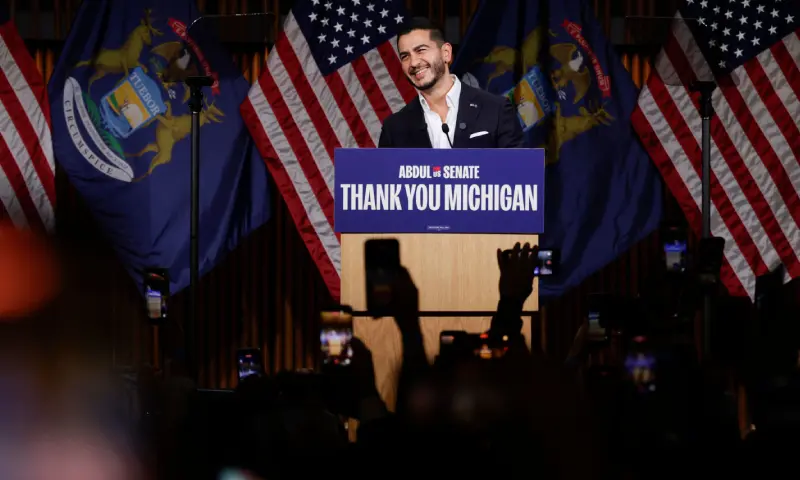
Democrat Abdul El-Sayed has won Michigan’s US Senate election, defeating Republican candidate Mike Rogers in a closely watched contest and making history as the first Muslim elected to the United States Senate.
The 42-year-old former public health official secured the seat previously held by retiring Democratic Senator Gary Peters. His victory marks a significant moment for Muslim representation in American politics and gives the Democratic Party an important win in its effort to strengthen its position in the Senate. US media outlets projected El-Sayed as the winner on November 4, 2026.
Abdul El-Sayed's Campaign Focus
El-Sayed built his campaign around the economic challenges facing American households, particularly rising living costs, healthcare expenses and concerns about corporate influence in government.
One of his major campaign priorities was universal healthcare, including support for Medicare for All, a proposal aimed at expanding publicly funded healthcare coverage. He also called for reducing the role of large corporate donors and outside money in political campaigns.
His campaign attracted support from voters who wanted changes in the country's healthcare system and a stronger focus on working families. El-Sayed also gained attention for campaigning in communities beyond the Democratic Party's traditional strongholds.
A Closely Watched Michigan Senate Race
The election attracted national attention because Michigan is a politically competitive state. El-Sayed faced former Republican congressman and FBI agent Mike Rogers, who had backing from President Donald Trump and national Republican figures.
The campaign featured sharp disagreements over economic policy, healthcare, immigration, foreign policy and the candidates' political positions. Republicans criticized El-Sayed's views and made allegations about his political associations, including claims involving the Muslim Brotherhood. El-Sayed denied those allegations, and reporting on the race noted that evidence supporting claims of terrorist ties was not presented.
The contest also exposed divisions within Democratic ranks. Congresswoman Haley Stevens, whom El-Sayed defeated in the Democratic primary, endorsed Rogers shortly before Election Day, adding another challenge to his campaign.
Historic Milestone for Muslim Representation
El-Sayed's election represents a historic development for Muslim Americans, who have had limited representation in the US Senate. His victory places him among the lawmakers entering the chamber with a campaign focused on healthcare access, economic concerns and political reform.
In his victory speech in Detroit, El-Sayed celebrated the result and thanked supporters who helped his campaign across Michigan. He also addressed Vice President JD Vance, saying he was constitutionally obligated to swear him in when the new Senate begins its term in January.
What Happens Next?
As senator-elect, El-Sayed is expected to take office in January 2027, following the completion of the election process and the beginning of the new Senate term.
His campaign commitments will now face the realities of legislative negotiations, where passing major proposals such as Medicare for All would require sufficient support in Congress.
The election outcome also adds to the broader national debate over healthcare affordability, political representation and the direction of the Democratic Party. El-Sayed's upcoming Senate term will be closely watched as he works to turn his campaign priorities into policy.